AI roleplay simulations
Nobody is born knowing how to answer "that's too expensive." The first time a salesperson hears that objection, they almost always answer it badly. And it's not a lack of talent.
It's that, until now, the only place to practice a sales conversation was in front of a real customer. The most expensive place in the world to make a mistake.
That just changed. AI gives your team a safe place to fail.
A safe place to fail
This is how humans learn: try, fail, adjust, try again. Failing was never the problem. The cost of failing was.
An AI simulation flips the equation. Your salesperson has a voice conversation with a customer who sounds and reacts like a real one. They can get it wrong a thousand times. They can test bold answers. They can freeze, take a breath, and start over.
And none of it costs a sale, a relationship, or an embarrassing moment in front of colleagues.
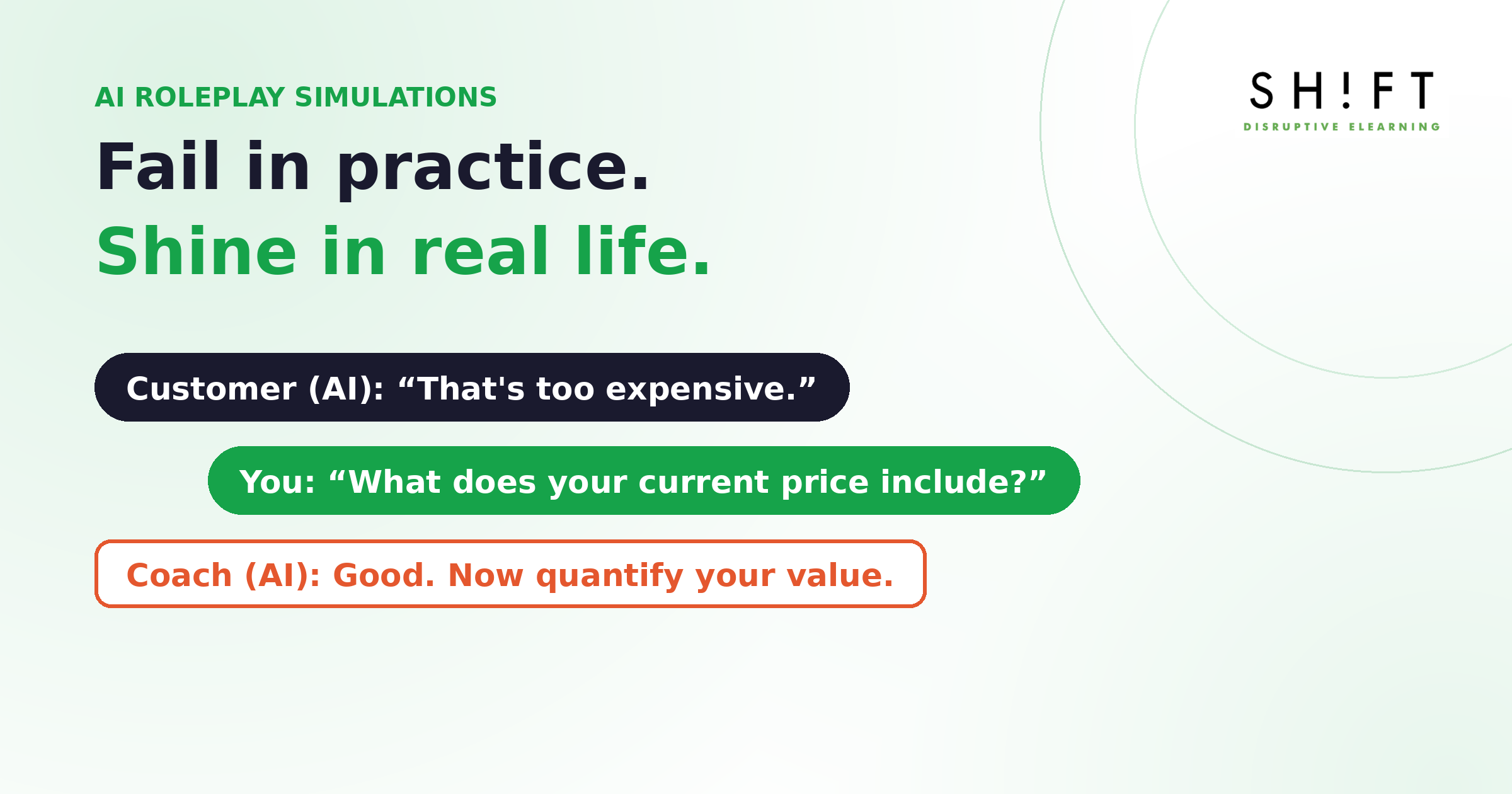
The idea in one sentence: fail in practice, shine in real life. When failure is free, people dare to practice more — and people who practice more improve faster.
The cycle that builds mastery — now with zero cost per mistake.
What a practice session looks like
A session is a real conversation, by voice. The AI plays the customer. You sell.
Realistic practice + concrete feedback, on every attempt (illustrative conversation).
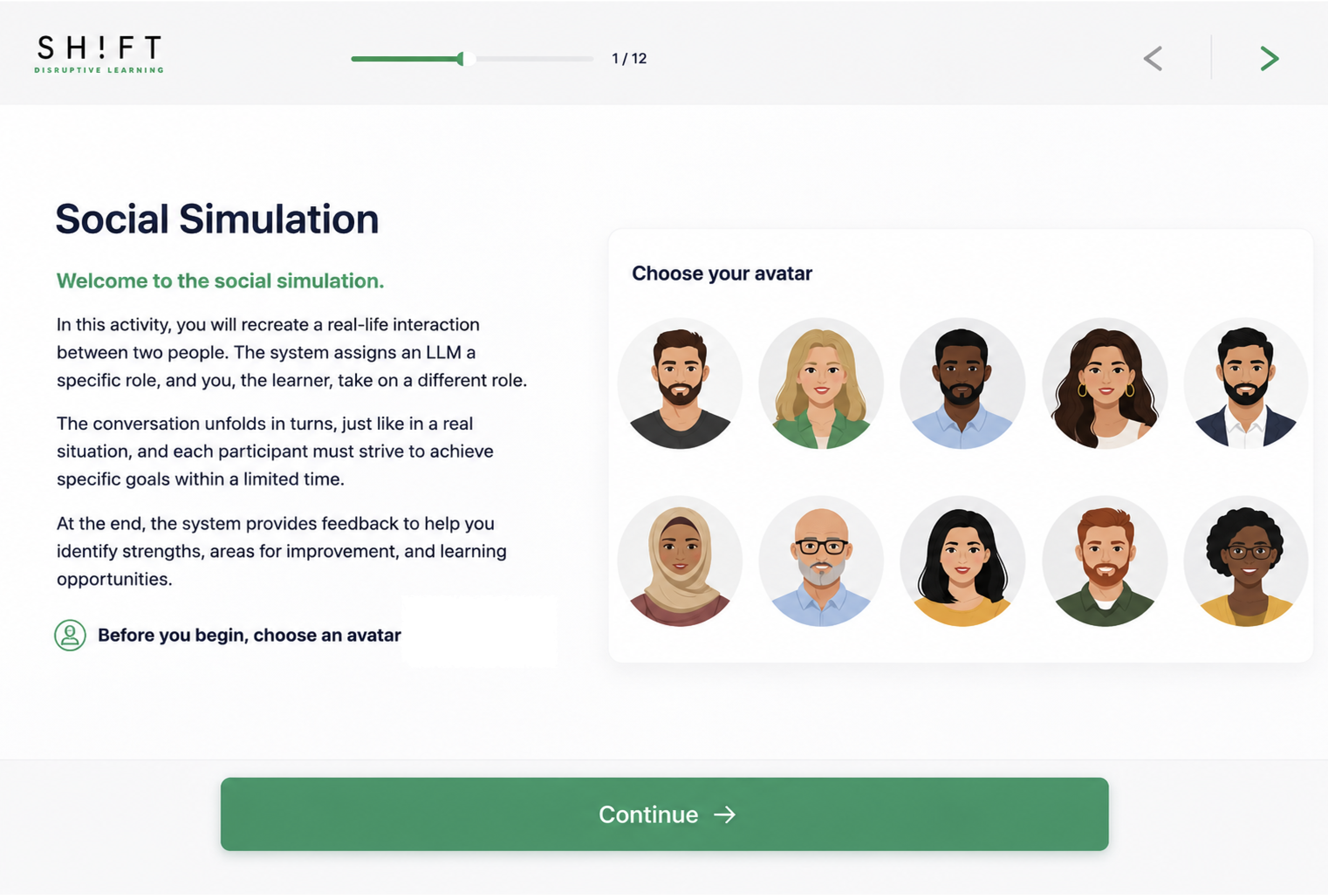
A real session: a voice conversation with a customer who reacts to what you say.
Practice the conversations that produce revenue
What should your team practice first? The scenes they live through every single week:
Each of these conversations has technique. And technique, in any discipline, is built through repetition.
The feedback a customer will never give you
When you lose a real sale, the customer rarely tells you why. You're left guessing.
The simulation does tell you. At the end of every session you get a clear evaluation: what you did well, where you rushed, which opportunity you let slip, and what to try on the next attempt.
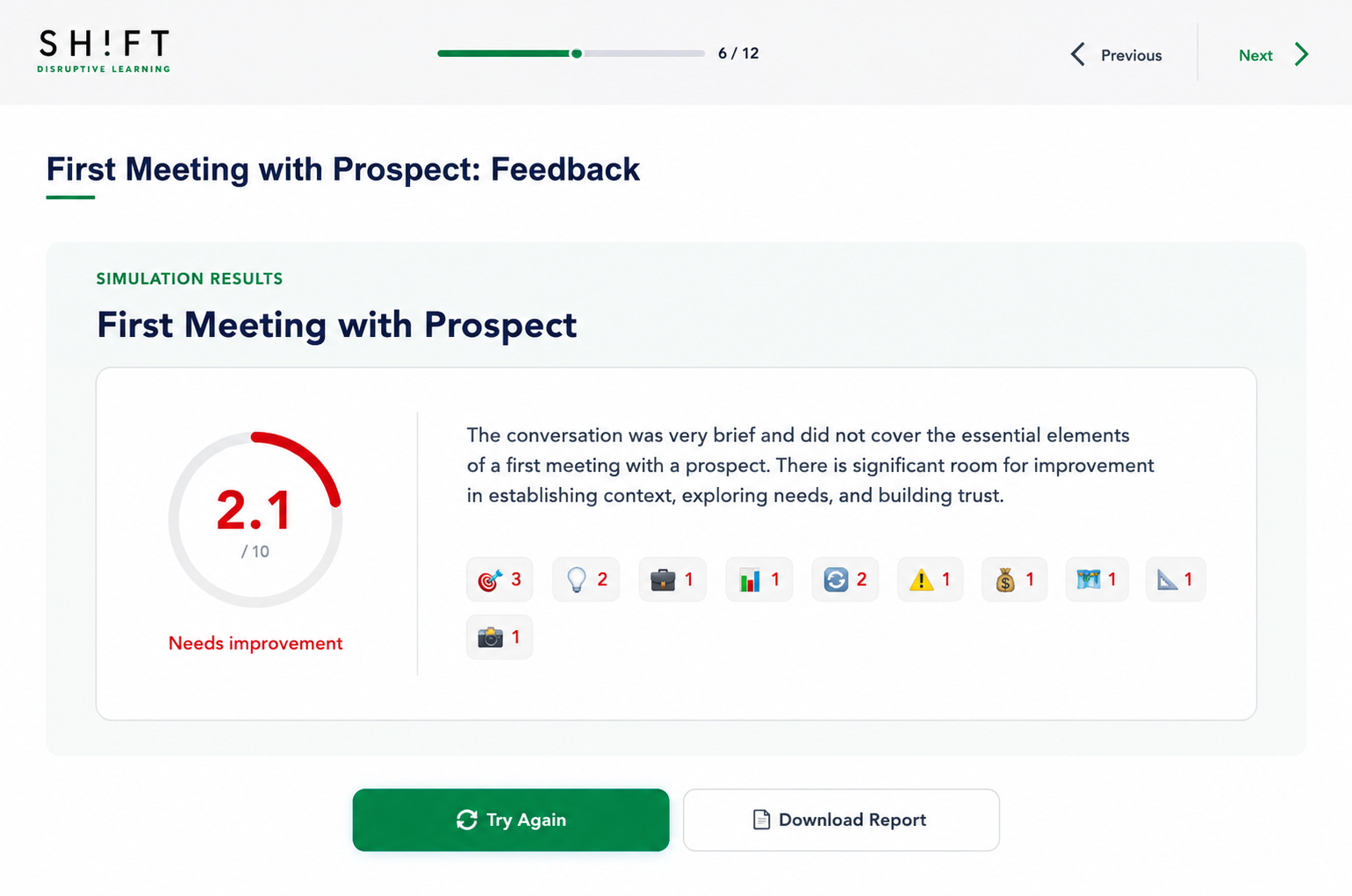
After every practice: automatic feedback — specific and actionable.
Five tips to practice like a professional
The leader as head coach
For whoever leads the sales team, simulation is a double gift.
First, because training no longer depends on their calendar. Practicing used to require the manager playing customer, one rep at a time. Now the team practices whenever they want, as often as they want. The leader focuses on what only they can do: choosing the scenes of the month, defining what a great answer looks like, and celebrating progress.
Second, visibility. Practice results show who has mastered which scene, who needs support, and which objection is hard for the whole team. Coaching stops being generic — it goes exactly where it's needed.
What changes for your team
Confidence. That's what changes.
A salesperson who has heard "that's too expensive" fifty times in practice doesn't freeze when they hear it live. They smile inside — they know this scene. New hires arrive at their first customer visit having already sold dozens of times. And veterans finally polish the difficult conversations they used to avoid.
Onboarding changes its nature too. Instead of weeks of theory followed by live improvisation, new hires practice from day one. They arrive at their first real visit with the experience of dozens of conversations behind them.
Failing stopped being a risk. Now it's the training ground. That is the abundance AI brings to sales: unlimited practice, for everyone, every day.
How to start this week
Three frequent questions
Give your team a safe place to fail
SHIFT's Social Simulations are voice-driven AI roleplay: your team practices sales, service, and difficult conversations with simulated customers that truly respond. Creating eLearning since 1996, with 6+ million people trained across 43+ countries.
Meet Social SimulationsReady to transform your corporate training?
See real results from companies that train with SHIFT — or talk to our team.