

SHIFT's eLearning Blog

Our blog provides the best practices, tips, and inspiration for corporate training, instructional design, eLearning and mLearning.

To visit the Spanish blog, click here
    All Posts

    SHIFT December Release

    The latest updates to SHIFT have been released and recorded for you to view on demand.

    Hosted by Rick Beaudry, CEO of MindMuze Inc.

    View The Latest Release Webcast


    Support in Portuguese

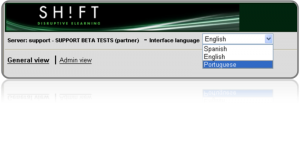
    SHIFT is now available in Portuguese as well as in English and Spanish.

    This new improvement will help you develop your courses in Portuguese quicker and easier.

    Select the language you want to use by clicking on the drop down menu called Interface's Language in SHIFT's main screen.

    Doing so will change the course's parameters, buttons, navbars and other elements to Portuguese.
    eLearning languages

    Reports

    Knowing the details of the courses created in your server will now be easier with SHIFT's new reports.

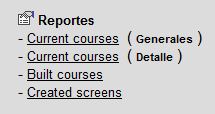
    To see your course's details go to the Admin View (Only available for users with an Administrator profile) and click on either one of the reports available.
    describe the image


    Current Courses (General)
    Shows a list of all the courses created inside the server, their Code, Name, Screen Count, Creation Date and Weight.

    Current Course (Detail)
    Presents a detailed description of the courses, as well as their Code, Name, Screen Count and the date of the User's Last Login.

    Built Courses

    The Built Courses report allows you to see courses that were built during a specific time period. You will see the courses that were built, their corresponding amount of screens and if they're marked "For Reviewing" or not.

    The report that shows if a course is marked "For Reviewing" or not is important when the user is being charged by published screen because it allows you to have a record of all the screens that were built.


    Karla Gutierrez
    Karla Gutierrez
    Karla is an Inbound Marketer @Aura Interactiva, the developers of SHIFT. ES:Karla is an Inbound Marketer @Aura Interactiva, the developers of SHIFT.

    Related Posts

    The Ultimate Game Level: Why Adaptive Learning Software Beats a Static Leaderboard

    Let’s rip the band-aid off: Leaderboards are the "participation trophies" of corporate training. Sure, they work for the top 5% of your hyper-competitive salespeople. But for the other 95% of your workforce? A leaderboard isn't motivating. It’s a public reminder that they are "losing." Once an employee realizes they can’t crack the Top 10, they check out. Game over. If you want to create a true addiction to learning, the kind that keeps gamers glued to screens for hours, you don’t need a scoreboard. You need Flow. Video games are addictive because they adapt to the player. Level 1 is easy. Level 50 is brutal. If the game stayed at "Level 1" difficulty forever, you’d get bored and quit. If it started at "Level 50," you’d get frustrated and quit. This is where traditional eLearning fails, and where adaptive learning software changes the game entirely.

    How the Hook Model Turns Gamification into High-Performance Habits

    We all know the feeling: You open an app "just for a second," and suddenly 20 minutes have passed. You were engaged, focused, and maybe even enjoying yourself. Now, imagine if your employees felt that way about your corporate gamification strategy. For too long, L&D has treated gamification as a visual layer, slapping a leaderboard on a PDF and calling it a day. But true gamification isn’t about points; it’s about psychology. It’s about creating a "Learning Loop" that feels natural, rewarding, and yes, habit-forming. To move beyond superficial badges, we need to look at the engine behind the world’s most engaging apps: Nir Eyal’s Hook Model. Here is how you can use this 4-step framework to build a gamification strategy that drives real performance.

    Why Badges Don't Work: The Psychology of Addictive Corporate Training

    Let’s be honest: Your top sales executive doesn’t care about a digital "Gold Star" for finishing a compliance video. They don’t want a "Subject Matter Ninja" badge for clicking Next fifty times. If your corporate gamification strategy relies entirely on leaderboards and stickers, you aren't gamifying learning—you’re patronizing your workforce. For years, the L&D industry has confused "gamification" with "decoration." We took boring, static slides and plastered points on top of them, expecting engagement numbers to skyrocket. Instead, we got employees who click through content just to make the notifications stop. To fix engagement, we must stop designing for children and start designing for the adult brain.