
 Boosting Employee Engagement Through eLearning">
Lately, I'm sure you've noticed there's been no shortage of buzz about employee motivation -- particularly when it comes to the benefits of employee engagement and it's effectiveness in motivating .
Employee engagement is the new management must do. Understanding that workers are looking for career opportunities and personal growth rather than just monetary incentives, is basic.
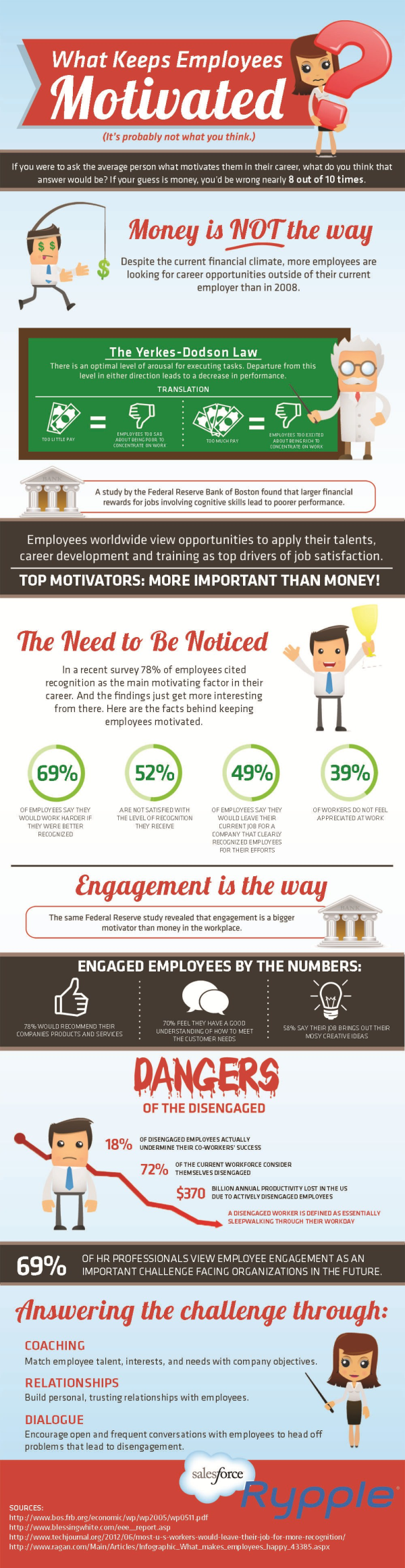
According to this infographic from Salesforce, the answer for business success goes beyond employee motivation…instead, it’s all about engagement! In other words, disengaged employees are a threat to a company. Here are some highlighted stats from the infographic that make the case:
- 69% of HR professionals view employee engagement as an important challenge facing organizations in the future.
- 72% of current workforce consider themselves disengaged.
- $370 billion annual productivity lost in the US due to actively disengaged employees.
Did you know? Different studies reveal the main reason people are leaving their jobs is that they do not feel their current position provides enough opportunities for growth. Supporting this, the National Research Business Institute found that 23 percent of employees leave for the lack of development opportunities and training. As a result, companies are realizing that employee engagement, performance, productivity and profitability are all correlated.
The infographic also features the different ways in which you can address this challenge. Check it out below, and include eLearning to this list! More than just coaching, implementing dialogue and building strong relationships, increase the training and development opportunities available to your workers. Here is where eLearning plays a critical role: it's definitely an affordable tool to engage employees in ongoing development. But it’s not just about increasing the amount of courses available for them; it’s about offering learning opportunities that are interesting, relevant and interactive. Be careful… even if a course is relevant, if the lecture style format is boring, participants will usually become disinterested very easily (read this post: How To Beat Boring eLearning).
Source: Salesforce
Bottom-line: eLearning is the tool you were looking for increasing employee engagement. Workers fear to fail in front of others is eliminated as they can learn in the privacy of their own office, home or coffee house. Also their schedules are not limited to space or time because with online training they can access their materials anywhere anytime they want. Learners have so many options available with eLearning that they won’t even notice they are in a training session (podcasts, augmented reality, learning games, storytelling, simulations, etc).
We know that transforming employee’s into a highly engaged workforce is not easy or fast, but pursuing it is critical for improving your business in so many areas (performance, customer service, productivity, etc). According to Forbes, companies with an engaged workforce have 6% higher net profit margin, and engaged companies have five times higher shareholder returns over five years.
What steps are you taking to build a highly motivated and engaged workforce? Is eLearning in your plan?

Ready to transform your corporate training?
See real results from companies that train with SHIFT — or talk to our team.