
 A List of Great Checklists Every eLearning Professional Should Have">
Checklists can make your job a whole lot easier. Using them ensures that you won’t forget anything important. Especially in eLearning, where there are so many steps, procedures, tips and practical concepts involved.
That's why we decided to go through a whole bunch of lists and come up with the list below. If you’re looking for simple and straightforward checklists that cover all the little details, check out these resources.
1) The Ultimate eLearning Design and Development Checklist
This is a simple checklist created by Nicole Legault for those involved in the design and development of eLearning courses. Not every item on the entire list will apply to every project, however altogether it covers a broad range of items.
Extra: Take a look at this other short list created by ITC Learning. Ensure you include these essential requirements in your eLearning courses to achieve effective and meaningful courses.
2) The Ultimate 10-Point Checklist for Remarkable eLearning Courses
Make your next eLearning course a huge success with this 10-step checklist. The idea of creating this list is for you to focus more on creating eLearning courses that resonates with your audience. It isn't necessary to apply every element on the checklist, but this list is works as an indicator of effective eLearning courses.
3) Checklist for Strong eLearning
This checklist, created by Cathy Moore, helps eLearning professionals make sure they have all the important elements of a strong eLearning course. However, this checklist works differently, instead of simply checking off each point, you choose a spot on a spectrum between “action-oriented materials” and “information dump.” There are 14 items to evaluate. Once you’ve rated them all, you can glance down the “spectrum” column to see which items are closest to the dreaded “information dump” and therefore need the most work.
4) Checklist before publishing an eLearning course
To avoid eLearning failure print out this checklist and consult it every time you're reviewing an eLearning course. This 8 Questions To Ask Before Your Course Go Live Checklist can help you eliminate that careless but harmful mistakes. Make sure you’ve ask these questions and run through them quickly to maximize your chances of eLearning success.
5) eLearning Quality Design
Here is a small checklist to help analyze the quality of an eLearning course. It enlists the six necessary factors to ensure quality design. Have your team achieve these six factors every time to ensure a high-quality outcome.
Extra: QA is an ongoing process in the eLearning course development.... therefore also take a look at this list of elements that needs to be verified during the final QA process.
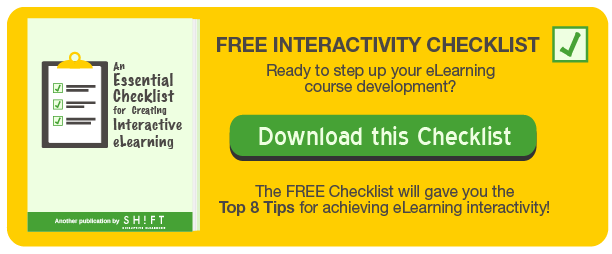
6) eLearning Interactivity Checklist
Download this easy to follow checklist to effective eLearning and ensure you include the right amount of interactivity into your courses. See everything related to building interactive eLearning in this one-page simplified list. It'll be a handy checklist to ensure you don't miss out on any of the key ingredients of interactivity. Share it with your team and staff members so that everyone's on the same page.
7) eLearning Usability Checklist for Beginners
Learners expect it, and they actually like it when you make their lives easy. They want to take an eLearning course that is super user-friendly. For this, you need some careful planning, that’s why this checklist will definitive guide you through. This is a must-have for all eLearning professionals!
Which of these do you find more helpful? Do you have another checklist we can include in this post? Tell us!

Ready to transform your corporate training?
See real results from companies that train with SHIFT — or talk to our team.