 5 Instructional Techniques that Encourage Optimal Learning">
It’s no secret that students learn best when they can set their own goals. But did you know that you can help students find effective learning strategies? That you can actually help them get the most out of their lessons?
Teaching for maximum learning is part of your noble profession as an instructional designer. Use these five techniques below to encourage optimal learning among students in your eLearning courses.
1) Case Studies
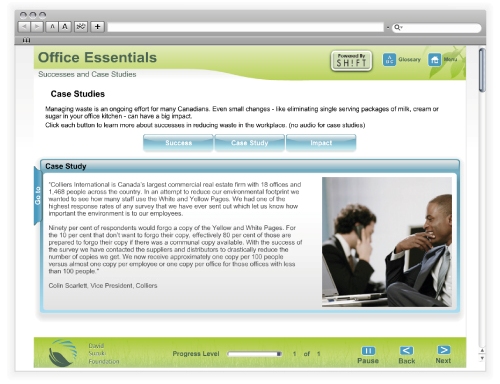
 Case studies are written stories that present rich situations, real or fictitious. Because they often involve a dilemma and pose a realistic problem, case studies are successful in engaging students. Studies prove that people learn to solve real-life problems by comparing actual situations to situations they’ve encountered in the past. Therefore, by including these in your eLearning courses, learners can recall situations they've encountered in their training sessions in order to solve real-life tasks.
Case studies have a number of benefits as an instructional strategy. Use them in any subjects, depending on your goals as a course developer. You can find case studies from books and online sources. But you can also craft your own.
Because case studies are designed to improve learners’ decision-making and critical thinking skills, your material should have elements of conflict. It should lack an obvious or clear-cut right answer. Raise a thought-provoking issue that prods students to think and make a decision. Allow them to empathize with characters by describing the context, the characters and their actions.
2) Mind Maps
Help learners think globally, creatively, clearly and visually. This sounds like a daunting task but it’s definitely doable with the aid of mind maps. Mind maps definitely help structure content in a friendlier way rather than a simple written paragraph.
Those who don’t get mind mapping argue that it’s too simplistic. The truth is, there is more to mind maps than drawing some lines, writing a word or two and drawing some more lines. Mind mapping allows you to generate, sort out and structure or classify ideas. This published paper, in fact, shows how effective mind mapping effectively promotes learner’s self-monitoring. It helps them deal with information overload by understanding basic concepts clearly. It helps them concentrate on the whole picture and grasp information more efficiently by forming a mind panorama.

Check out the article 6 Simple Ways to Accelerate your Learning with Mind Mapping.
3) Role-play Simulations
Remember the importance of taking a learner-centered approach to teaching? Role playing is one effective way of transforming your students into active participants. It's a powerful and dynamic tool that provides learners with the impact of their own actions on a specific context. By taking on a persona in a role-play simulation, a student is able to deeply understand and retain more information. They can make and correct mistakes while preparing themselves to be more effective in real world situations.
There are various ways role-play can work in eLearning, including observation, modelling, self-reflection and re-enaction. Take a sales training simulation, for instance. The learner engages with a simulated client, applies prior knowledge and uses appropriate communication skills. This activity alone, when implemented with your guidance, can help learners properly deal with real-life situations.
4) Note-taking
This traditional method has been proven effective for years. But while students can easily take down notes inside the classroom, an online platform hardly ever encourages students to do the same.
As an eLearning course developer, you too can include a mechanism for note-taking and encourage students to take notes. Note-taking can turn them from a passive learner into an active student. Cognitive psychologists consider it as a form of rehearsal. By repeated exposing themselves to information, students are likely to remember it when taking a quiz or certification exam online. Just the act of making those notes represents a deeper connection with the material than if learners were simply sitting there watching and listening.
5) Progressive Revelation
 By progressively revealing information, especially visual information, you are giving learners enough time to recall or retrieve information from their long-term memory.
You can, for instance, show one part of a diagram, give students some time to think and then slowly complete it. Experts agree that this instructional strategy is good for encoding information in the long-term memory. If the student's working memory is overloaded with information, additional content you pass on will be quickly forgotten. But if you break content into different screens, its much easier for learners to digest and to understand. This simple instructional technique yields long-term benefits that students deserve to use them.


Ready to transform your corporate training?
See real results from companies that train with SHIFT — or talk to our team.