SHIFT Share Continues To Grow
SHIFT Share is our innovative online community supporting the students in the global SHIFT Certification program. We welcome new students weekly and utilize SHIFT Share ...
Read more →Ideas, research and practical guidance on AI-powered training, instructional design and learning ROI.
SHIFT Share is our innovative online community supporting the students in the global SHIFT Certification program. We welcome new students weekly and utilize SHIFT Share ...
Read more →By Rick Beaudry, CEO, MindMuze www.MindMuze.com - a SHIFT Authorized Partner. With a keen focus on fueling new growth opportunities associated with the economic ...
Read more →Thank you to everyone who joined our webcast yesterday! It was recorded and is now avaiable for you to view on demand.
Read more →The latest updates to SHIFT have been released and recorded for you to view on demand.
Read more →Learn how to enhance any existing elearning course using simple SHIFT tips and visual tricks.
Read more →We are thrilled to be exhibiting at the upcoming Learning Technologies Conference next month in London! Learning Technologies is now the biggest exhibition and ...
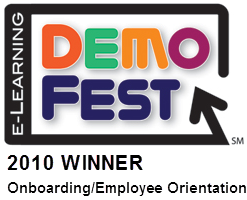
Read more →SHIFT took top honours at DemoFest in the Onboarding / Employee Orientation category. Rick Beaudry, CEO of Mindmuze, demonstrated the winning technology again during the ...
Read more →Nov 29, 2010, Toronto: SHIFT, a rapid eLearning authoring tool, won top award at DemoFest in the Onboarding / Employee Orientation category. Rick Beaudry, CEO of ...
Read more →(With many thanks to Karl Kapp and Robin Yap for providing the inspiration for this article) "No man is an Island, entire of itself; every man is a piece of the ...
Read more →FOR IMMEDIATE RELEASE: Toronto, Canada , November 10, 2010 Scenario based learning allows educators to engage students in the eLearning environment creating an enriched ...
Read more →Narrated video demonstration of the creation of a scenario using SHIFT's new Scenario Builder. Click HERE to watch the video demonstration. For a more detailed look at ...
Read more →