Our blog provides the best practices, tips, and inspiration for corporate training, instructional design, eLearning and mLearning.
To visit the Spanish blog, click hereThere are a lot of things to consider when creating an eLearning course. But, what most people want to determine are the numbers. Specifically, how long will it take to create a course and how much will it cost? Although this will vary, whether you are doing your own eLearning course or handing off to someone else, here are some tips that will save you or your team some valuable time.
Starting out on your eLearning journey without defining the information or skills that you want your learners to obtain by the end is like setting out on a road trip without a destination. While this might make for a neat setup for an indie film about four friends trying to find themselves, this really doesn’t work for eLearning. So, what is a learning objective? It is an expected outcome of each lesson/unit and, overall, what you want your learners to be capable of by the end of the it. They also break down the content into more manageable chunks that can be applied to modules within the overall course. Start by picking 3-4 objectives. Now make sure your content doesn’t wander too far away from these objectives. The Art of Writing Good Learning Objectives However, a bunch of phrases that are put together and doesn’t explicitly relate what the learners should be able to achieve at the end of the course is of no use. Objectives need to be written in a way that the learners can relate to their need for taking the training and visualize the result or the learning outcome. Before writing course objectives, you always have to think from the learner’s perspective. You should step into their shoes to understand their needs and aspirations. Also, consider the demands of their jobs, so you know exactly what skills they need to excel in their professional duties. Being an integral part of the eLearning development process, you can't deny the importance of knowing how to write rockin' course objectives.
Now what? So you’ve decided to take your training online. There is an audience eager to access your expertise, you’ve narrowed down your topics, you’ve have identified your target audience, and you’ve even selected an authoring tool. Now what? Despite the common assumption, developing a successful eLearning course is not as simple as transferring your Powerpoints to an online environment. However, it’s not rocket science either. The secrets to eLearning success lie in between purposeful planning and engaging interaction.
Every day more companies are opting to convert their classroom material to digital courses. Fitting for modern learner needs, eLearning allows a continued education option for those who want to train anywhere, anytime or master a subject at their own pace. Also, by going digital, companies cut down training costs as the recurring instructor fee and logistical costs are shelved off. If you are one of these companies eager to convert your classroom training to eLearning, you must first understand what mistakes to avoid early on. Certainly avoiding them alone won’t be enough to guarantee great results from day one. However, they will guide you in establishing a strong foundation.
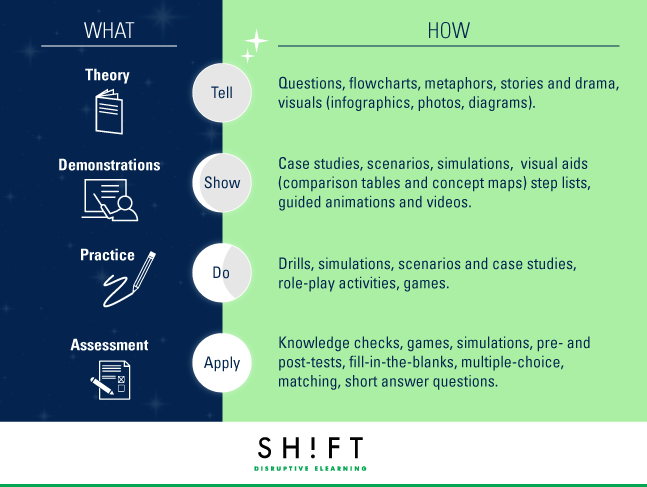
Elearning is widely used by companies to facilitate continued education among employees. It saves costs as well as allowing workers to learn on their own time and at their own pace. As we all know, an excellent instructor not only offers in-person interaction but has a way of conveying the information to keep students interested. If the instructor is to be removed from the learning experience, then the most important thing to consider is how you will maintain the quality of delivery and engagement despite this change in dynamic. Without an instructor guiding through slides, how can you bring the content to life? Without the classroom discussion, how can you introduce examples to further develop points? It’s important to keep this challenge in mind as it will help you navigate the decisions ahead. Luckily, once considered, it will help you create a new dynamic in which students will eagerly breeze through the course.
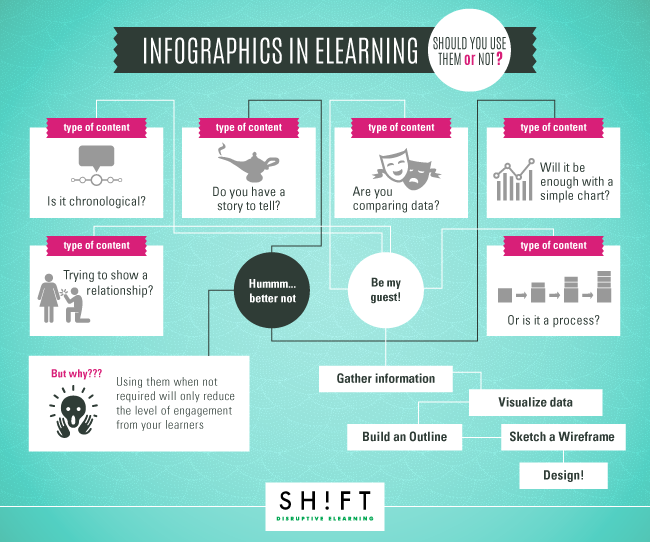
Looking at websites of some of the biggest companies in the world (think Apple and Google), you’ll see they’ve come a long way regarding web and graphic design. From the days of cramming in as much content as possible, we’ve entered an era where every line, image, color, and call-to-action is well researched and tested to grab your attention, keep you engaged and make you take action.
So, you have completed your eLearning course or module, and you are ready for learners to begin learning from it. Does this mean that you can move onto the next project and forget about the existing one? Absolutely not! If you think of eLearning Designers as project managers, you begin to see that there are specific ways in which to interact with already created courses. There are essential questions to ask, features to check, and maintenance windows to update in any existing course.
Every job position should be viewed in its entirety, from the hiring process to retirement (or resignation/firing). Organizations must provide the circumstances and resources necessary to develop the knowledge, skills, and abilities of their employees every step of the way. This point of view helps organizations set their employees up for success, and has the added benefit of improving employee retention and engagement.
We combine best-in class technology, strategy and future-proof business solutions to bring your content to life, faster!