Our blog provides the best practices, tips, and inspiration for corporate training, instructional design, eLearning and mLearning.
To visit the Spanish blog, click hereYour team has invested some long hours into creating an eLearning course to help your employees address a specific process or learn a new subject. Perfect! The work has been done, the time and money have been invested. You’ve launched your course...and crickets. Nothing happens. No one is taking your course. As the weeks pass, your team realizes that a lot of time and money has gone to waste. You can avoid this kind of drama with the right preparation and execution. Preparing for a launch can dramatically increase the success of the launch and overall engagement with your course.
“Plenty” is a problem. According to findings from the High-Impact Learning Organization study by Bersin by Deloitte, employees find it most difficult to learn, NOT because there isn’t enough content, but because there is TOO MUCH of it, and they cannot find what is valuable. Enter content curation. Many future-focused organizations have adopted content curation as one of their L&D strategies. It is time you did too! Content curation delivers your learners from the hassle, pain, and frustration of trying to wade through a sea of content to find what they need and what is relevant to their wants. The learning journey becomes smooth, and learners are more motivated to learn.
The art of training is knowing how and where to provide the right information to those who are in need of it. That said, this requires the right content, the correct delivery method, and the appropriate audience. Aligning all these components requires doing an in-depth analysis before even firing up your authoring tool. Don’t create training for training’s sake! As a rule of thumb, before building your next eLearning course, incorporate the analysis phase to full circle the development process. We know it may seem unnecessary, we know that your time is limited, and it appears to be a little complicated, but you're wrong! Brushing off the detailed reasons behind the “WHY” of your training may result in a myriad of mistakes. Among the worse, it can lead to significant amount of money and time wasted in creating an eLearning course that looks awesome, but that it isn’t relevant for the intended audience. Continue to review essential points and questions that will be instrumental in the analysis phase for optimal results.
Customers are the lifeblood of any business. Naturally, then, it makes sense to do everything you can to obtain new customers and retain the existing ones. What better way to do this than help them get the most value out of your organization’s product or service? Providing customer training is an excellent way to do just that, by enhancing their use and enjoyment of the products you offer. When studies were conducted back in 2012, researchers at Brandon Hall found that over half of all organizations were offering training for their customers and business partners. They noted that it was a powerful customer retention and development tactic, and one that you should seriously consider implementing in your organization if you haven’t already.
The expectations of today’s learner have changed, and corporations must keep pace with those expectations to keep employees happy and attract new talent. But that’s not the only thing driving change in the corporate training landscape. Employers have finally recognized that an organization with a strong learning culture, one that is aligned with business strategies and goals, will outperform its competition. Few would argue that Learning and Development is now more critical than ever to any corporation’s long-term success. This awareness has spurred a number of improvements to the corporate training landscape. Interesting read: 10 Statistics on Corporate Training and What They Mean for Your Company’s Future Several factors have contributed to the evolution of corporate training and the increasingly central role of learning within companies. In this article, we'll go over some trends L&D professionals can’t ignore anymore.
If we want to continuously improve job performance and business results, then we need to do a good job helping our employees gain and retain new knowledge and skills. Companies with effective eLearning programs can do just that. These companies also tend to attract and retain top talent, as well as increase employee engagement and satisfaction. The question then becomes, how do we get our employees EXCITED about taking and completing our eLearning courses? Well, we know for sure that we can’t do it with training that is seen as dull, compliance-oriented, irrelevant, or unsupported. What, then, are the keys to getting your employees (and supervisors) excited about eLearning? Here are six tips to get you started:
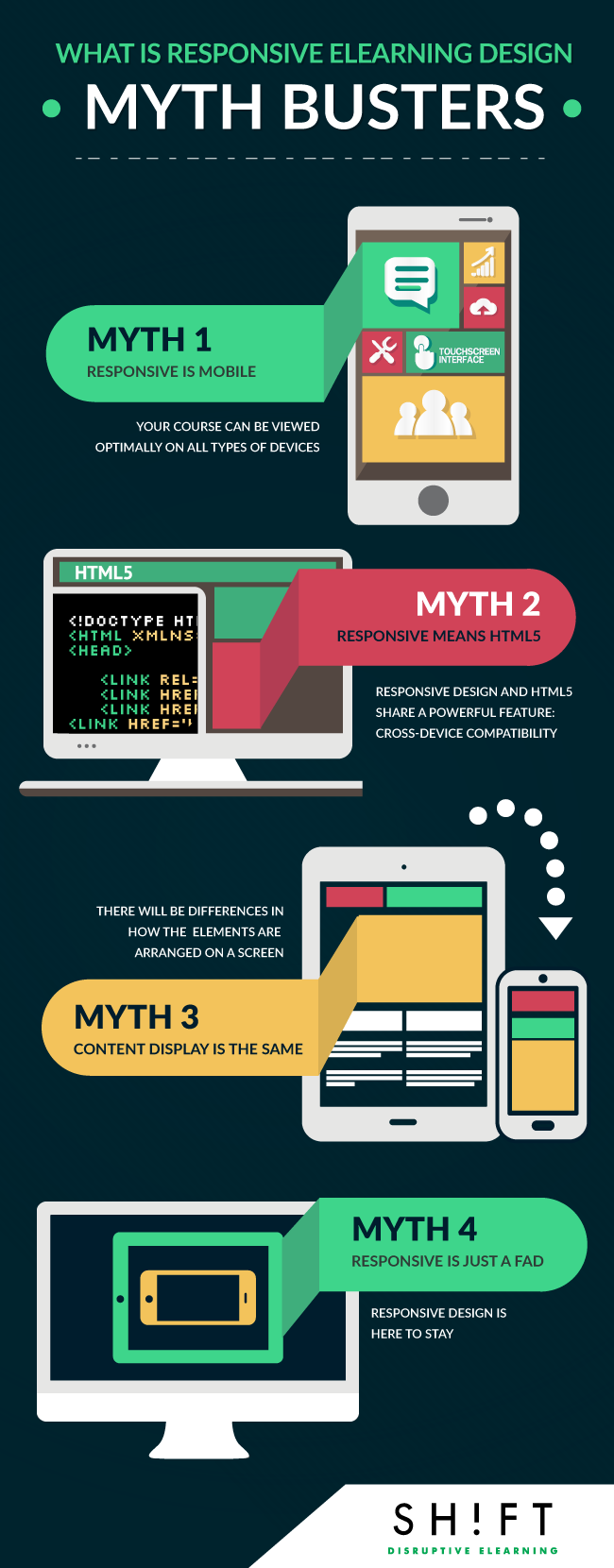
There is no question about it: now is the time to embrace mobile. Mobile learning (mLearning), is a rapidly growing area for training and development departments in organizations of all industries. It provides companies the opportunity to reach and engage employees in new and striking ways.
The key to the learning is making the process feel easy. The key to making it feel easy is creating a roadmap that covers points in a straightforward and purposeful matter. Think about it. You are creating this particular eLearning course because there is a need for it (hopefully you did a Needs Analysis first!). Learners are eager to acquire the skills and know-how, to change specific behaviors and advance in their everyday abilities. Having learning objectives is providing direction to your students! Creating an eLearning course without defining these first, is like walking in the woods without a compass. Sooner or later, you'll get lost! The art of writing objectives isn't hard to master. We've put together the following tips to help guide your writing journey and ensure successful eLearning courses.
We combine best-in class technology, strategy and future-proof business solutions to bring your content to life, faster!